
How to use Jitter
Users receive yield-bearing assets when they deposit funds into a yield source. For example, SUI deposited into Scallop becomes sSUI, and that asset represents both principal and future interest.
Jitter standardizes those yield-bearing assets as SY. SY can then be split into Principal Tokens (PT) and Yield Tokens (YT). PT represents the principal value, while YT represents the floating yield and point exposure of the same asset.
PT can be used to lock a fixed rate. YT can be used to take long yield and points exposure. LP positions pair SY and PT in the AMM so traders can enter or exit fixed and floating yield positions.
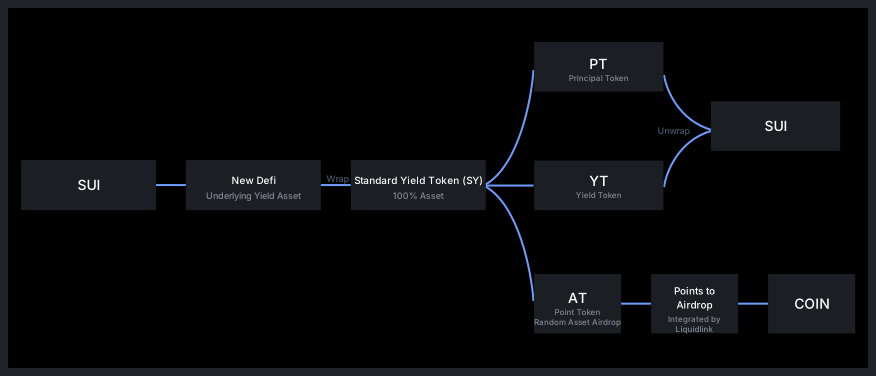
This is similar to bond stripping in traditional finance, where principal and interest are separated. PT behaves like the principal leg. YT behaves like the interest and incentive leg.
If you buy PT below its redemption value, the difference becomes your fixed yield at maturity. If you buy YT, you receive the floating yield and configured point rewards from the underlying yield source.
In beta, Jitter starts with small Sui yield markets. Liquidity, oracle freshness, adapter limits, and reward settings can affect quotes, so users should size trades carefully.